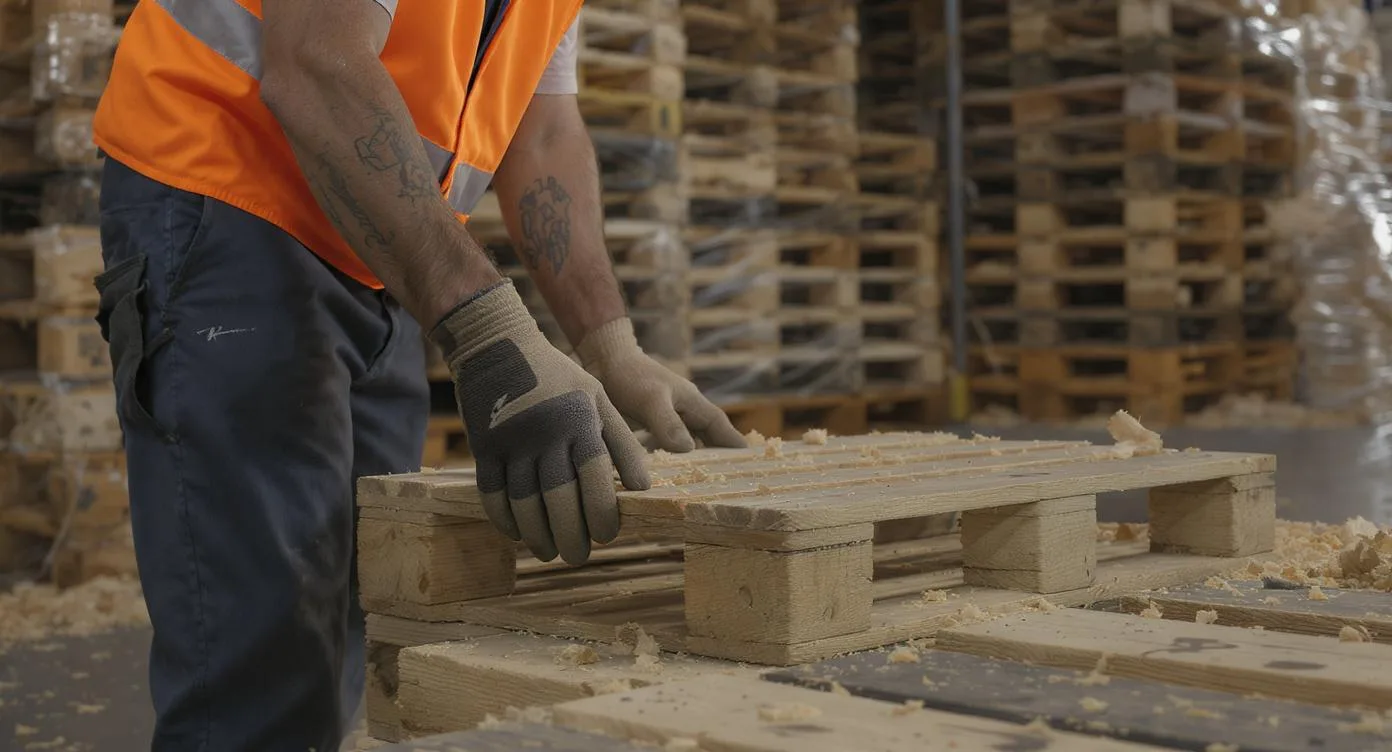
Wood vs Plastic Pallets
A practical comparison for warehouse managers, buyers, and operations teams choosing between wood and plastic.
Quick Verdict
For most short-distance and one-way shipments, wood pallets cost less, repair more easily, and ship from any local supplier. For closed-loop operations, automated warehouses, food and pharmaceutical work, or international export shipping, plastic pallets usually pay off over their longer life.
ANA Recycle Bulls supplies both. Below is a side-by-side comparison so you can match the right pallet to your operation. If you want help deciding, call us at (847) 672-7117 and we'll walk through your use case.
Side-by-Side Comparison
| Factor | Wood Pallets | Plastic Pallets |
|---|---|---|
| Up-front cost | Lower | Higher (typically several times more than wood) |
| Lifespan (avg trips) | 5 to 15 trips | 100 to 250 trips |
| Weight | ~40 to 70 lbs | ~30 to 60 lbs |
| Static load capacity | Up to 5,000+ lbs | Up to 30,000 lbs |
| Dynamic load capacity | ~2,500 lbs | ~2,500 to 5,000 lbs |
| Repairable? | Yes, low cost | No, but recyclable |
| Dimensional consistency | Variable (warps, swells) | Uniform every time |
| Hygiene / food-grade | Can absorb moisture and bacteria | FDA-compliant, washable |
| International export | Requires ISPM-15 heat treatment | No treatment required |
| Splinters / nails | Yes, occasionally | No |
| Best for | One-way shipping, general warehousing, lower-cost moves | Closed-loop logistics, automated systems, food and pharma, export |
Specs are general industry ranges. Contact us at (847) 672-7117 for current pricing and availability on specific products.
When to Choose Wood Pallets
- You ship one-way and don't get the pallets back
- You need the lowest up-front cost per pallet
- Your loads are sensitive to weight (heavy plastic adds shipping cost)
- You handle high pallet volume and need easy local sourcing and repair
- Your customers do not have hygiene or appearance requirements
- You're shipping domestically with no ISPM-15 concerns
About 90 percent of pallets in use across North America are wood. They're cheap, easy to replace, and the supply chain is built around them. For general warehouse and distribution work, wood is the default. See our bulk wood pallet inventory for current options.
When to Choose Plastic Pallets
- You run closed-loop logistics where pallets come back to you
- You operate automated racking, conveyor, or AS/RS systems that need uniform pallets
- You handle food, beverage, or pharmaceutical product
- You ship internationally and want to skip ISPM-15 fumigation and stamping
- You work in clean-room or controlled environments
- You handle wet, frozen, or chemically aggressive products
- You move enough volume that durability pays off in 1 to 3 years
Plastic pallets cost more up front but last 10 to 20 times longer than wood. For operations where pallets cycle back to you, the higher cost spreads over many more uses and total cost per trip ends up lower. See our bulk plastic pallet inventory for available types and sizes.
How to Decide
It comes down to trip count, what's on the pallet, and where it's going. If pallets leave your facility and don't come back, wood costs less overall. If they cycle through your operation 20 or more times, plastic usually pays for itself.
Hygiene and regulatory requirements often settle the question. Food, pharma, and clean-room operations need plastic. Exporters save real money on plastic by avoiding ISPM-15 treatment. For a small warehouse moving general freight to local customers, wood makes more sense.
Many of our customers use both: wood for outbound shipments and plastic for in-house material handling and racking. Call (847) 672-7117 if you want to talk through your specific operation and we'll help you figure out the right mix.
Frequently Asked Questions
Request a Quote
Tell us what you need and we'll get back to you with a free quote. No obligation, no hassle.